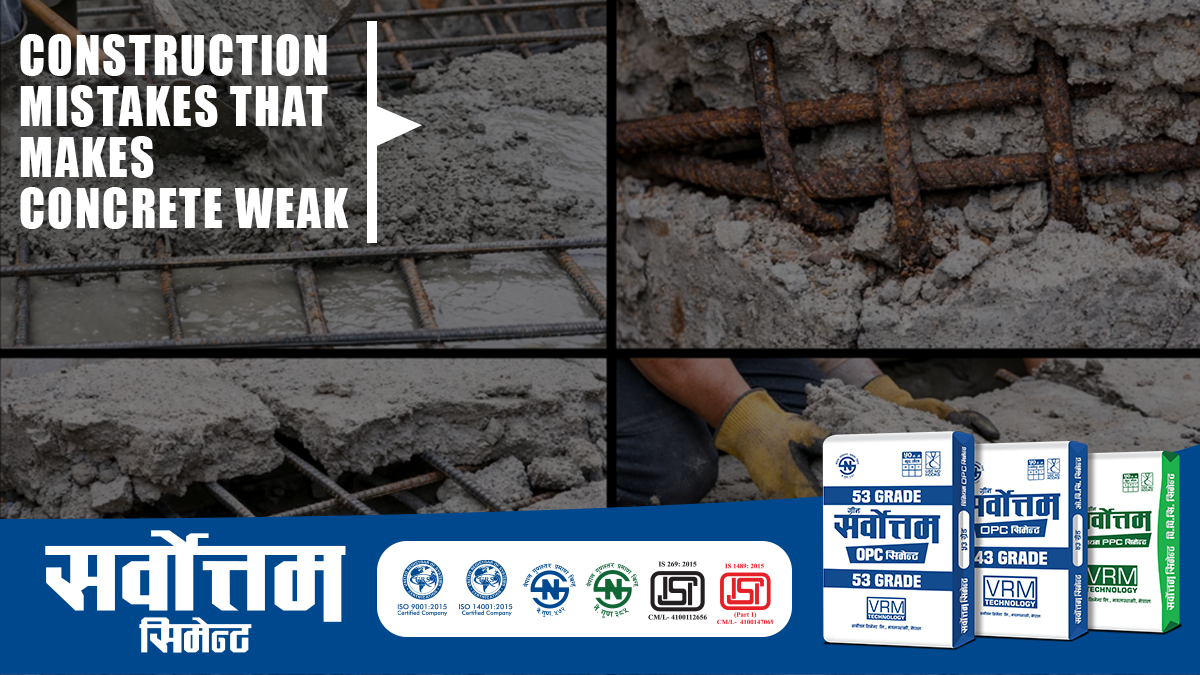
Construction Mistakes That Makes Concrete Weak
Concrete becoming weak after construction is one of the most common and expensive problems in Nepal. Many homeowners notice cracks, dampness, or reduced strength within months — not because of bad cement, but due to mistakes during construction. If you are building a house or managing a site, understanding these mistakes can help you avoid structural issues, repair costs, and long-term damage.
Quick Summary: Top Causes of Weak Concrete
● High water-cement ratio
● Poor quality materials
● Improper mixing
● Delayed placement
● Lack of compaction
● Poor curing
● Wrong mix proportion
● Expired cement
● Extreme weather exposure
● Lack of supervision
What Determines Concrete Strength?
Concrete strength depends on:
● Water-cement ratio (most critical factor)
● Quality of cement, sand, and aggregates
● Proper mixing and placement
● Compaction (removal of air voids)
● Curing duration and method
● Weather conditions during construction
Even small mistakes can reduce concrete strength by 20–50%.
10 Common Construction Mistakes That Reduce Concrete Strength
1. Incorrect Water-Cement Ratio
Problem
Adding extra water makes concrete easier to work with but significantly reduces strength.
Impact
● Lower compressive strength
● Increased cracking
● Water seepage issues
Solution
Maintain a controlled water-cement ratio (0.4–0.6). Avoid adding water randomly at site.
2. Poor Quality Construction Materials
Problem
Using low-quality cement, unclean sand, or poorly graded aggregates weakens bonding.
Impact
● Weak structure
● Surface defects
● Reduced durability
Solution
● Use fresh cement (no lumps)
● Clean sand (low silt content)
● Properly graded aggregates
3. Improper Mixing of Concrete
Problem
Uneven mixing leads to weak zones within concrete.
Impact
● Inconsistent strength
● Reduced load capacity
Solution
● Use machine mixing whenever possible
● Mix for at least 2–3 minutes
● Ensure uniform consistency
4. Delay in Concrete Placement
Problem
Concrete starts setting within 30–45 minutes.
Impact
● Cold joints
● Weak bonding
● Surface cracks
Solution
Place concrete immediately after mixing. Avoid unnecessary delays.
5. Inadequate Compaction
Problem
Air pockets remain trapped if compaction is not done properly.
Impact
● Honeycombing
● Weak internal structure
● Poor finish
Solution
Use a needle vibrator to remove air voids and ensure dense concrete.
6. Poor Curing Practices
Problem
Concrete needs moisture to gain strength. Skipping curing stops hydration.
Impact
● Major strength loss
● Surface cracking
● Reduced lifespan
Solution
● Minimum curing: 7 days
● Ideal curing: 10–14 days
● Keep surface continuously moist
7. Wrong Mix Proportion
Problem
Incorrect ratios of cement, sand, and aggregates disturb strength balance.
Impact
● Weak concrete
● Segregation
● Structural risks
Solution
Use standard mix ratios (like 1:2:4) or proper design mix for critical work.
8. Use of Expired or Moist Cement
Problem
Cement reacts with moisture before use, reducing its binding ability.
Impact
● Lower strength
● Poor performance
Solution
● Store cement in dry conditions
● Use within 3 months
● Avoid hardened or lumpy cement
9. Exposure to Extreme Weather (Nepal Context)
Problem
Nepal’s climate directly affects concrete strength.
Impact
● Fast drying in heat → cracks
● Rain → weak bonding
● Cold → slow strength gain
Solution
● Avoid pouring during heavy rain
● Cover concrete in monsoon
● Adjust curing methods based on weather
10. Lack of Skilled Supervision
Problem
Small errors add up when there is no proper supervision.
Impact
● Multiple quality issues
● Reduced structural safety
Solution
Ensure work is monitored by experienced engineers or contractors.
Real Site Insight (Nepal Experience)
In many construction sites in Kathmandu and Pokhara, the most common issue is adding extra water to increase workability. While it makes mixing easier, it significantly reduces strength and leads to cracks within months.
Improper curing during monsoon season is another major cause of long-term dampness and structural issues in houses.
Best Practices to Ensure Strong Concrete
● Maintain proper water-cement ratio
● Use quality materials from trusted suppliers
● Ensure proper mixing and placement
● Compact concrete properly
● Follow correct curing methods
● Monitor weather conditions carefully
Which is the Best Cement in Nepal for Strong Concrete?
Choosing the right cement plays a major role in achieving strong and durable concrete. Even if
all construction practices are followed correctly, using low-quality cement can reduce the overall
strength of the structure.
In Nepal, the best cement should offer:
● High compressive strength
● Consistent quality
● Good performance in humid and monsoon conditions
● Reliable bonding properties
Best Strength Cement in Nepal: What to Look For
1. Cement Grade
Higher grade cement (43 or 53 grade) provides better strength and faster setting.
2. Freshness
Fresh cement ensures proper hydration and bonding.
3. Manufacturing Quality
Modern production processes ensure consistent strength and performance.
Top Cement in Nepal for Construction Strength
Among the trusted options, Sarbottam Cement is widely recognized for:
● Consistent compressive strength
● Advanced manufacturing standards
● Reliable performance in Nepal’s climate
● Suitable for residential and commercial construction
Why Cement Quality Matters
Many construction mistakes become worse when low-quality cement is used.
Using high-quality cement helps:
● Improve concrete strength
● Reduce cracks and defects
● Increase durability
● Ensure long-term structural safety
Conclusion
Concrete strength depends not just on materials but on proper construction practices. Most failures occur due to simple mistakes like improper curing, excess water, or poor mixing. By avoiding these common mistakes and using high-quality cement, you can ensure stronger, safer, and longer-lasting construction.
FAQs(Frequently Asked Questions)
1. What is the main reason concrete becomes weak?
The most common reason is adding too much water, which increases the water-cement ratio
and reduces strength.
2. How long should concrete be cured?
At least 7 days, but 10–14 days is recommended for better strength.
3. Can weak concrete be repaired?
Minor issues can be repaired, but severely weak concrete may require reconstruction.
4. Does Nepal’s weather affect concrete strength?
Yes, monsoon, humidity, and temperature variations significantly affect curing and strength.
5. Is machine mixing better than hand mixing?
Yes, machine mixing ensures consistent strength and better quality.


