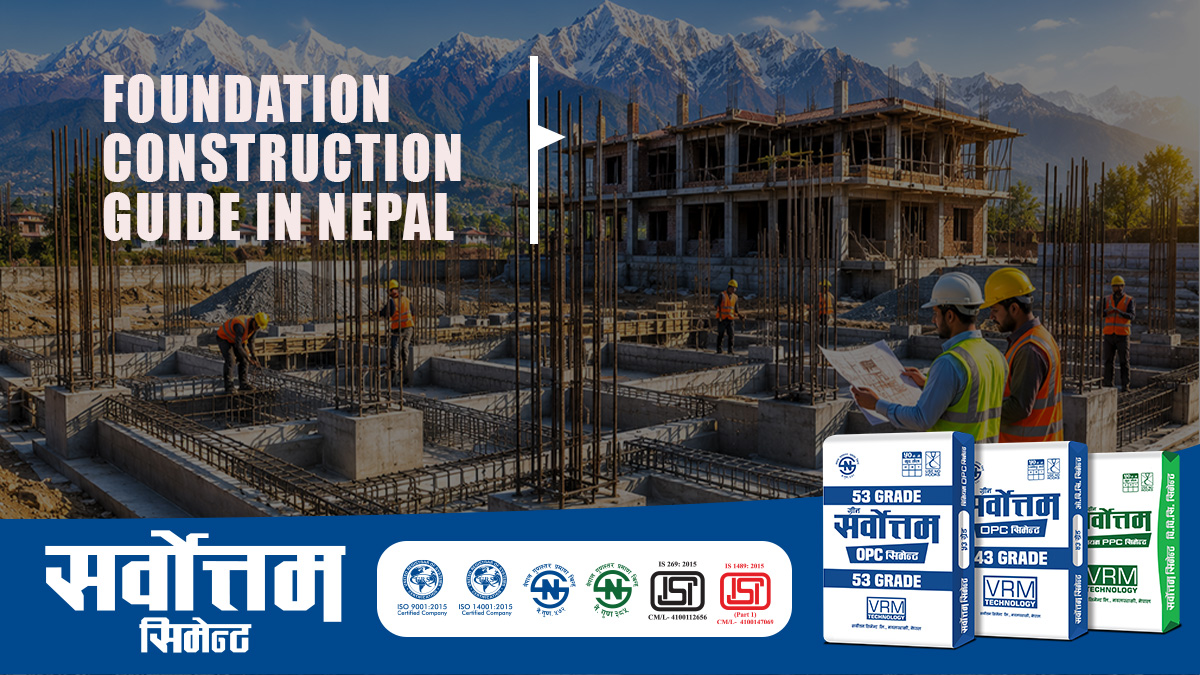
Foundation Construction Guide in Nepal: Key Factors That Determine Building Strength
Introduction
A building is only as strong as its foundation. Whether you're constructing a residential home, apartment complex, commercial building, or infrastructure project, the foundation serves as the backbone of the entire structure. It safely transfers the building load to the ground, ensuring stability, durability, and safety for decades.
In Nepal, foundation construction requires special attention due to seismic activity, diverse soil conditions, monsoon rainfall, and challenging terrain. Even a well-designed structure can face serious problems if foundation work is poorly executed.
Many homeowners focus heavily on flooring, paint, kitchens, and interior finishes while overlooking the importance of foundation construction. However, foundation-related defects can lead to settlement, cracks, moisture intrusion, structural instability, and expensive repairs in the future.
This guide explains the essential factors that influence foundation performance, common foundation types used in Nepal, construction best practices, and expert recommendations for building strong and durable structures.
Why Foundation Strength Matters
The foundation is the most critical structural component of any building.
Its primary functions include:
- Supporting the entire building load
- Transferring loads safely to the soil
- Preventing uneven settlement
- Improving structural stability
- Enhancing earthquake resistance
- Protecting against moisture-related damage
- Increasing the lifespan of the structure
A properly constructed foundation can ensure structural safety for generations, while poor foundation work can compromise the entire building regardless of how well the upper structure is built.
Why Foundation Construction Is Especially Important in Nepal
Earthquake Risk
Nepal lies in one of the world's most active seismic zones. Strong foundations improve a building's ability to withstand seismic forces by providing stability and effective load transfer.
Heavy Monsoon Rainfall
Continuous rainfall during the monsoon season increases soil moisture and may weaken poorly designed foundations.
Diverse Soil Conditions
Soil conditions vary significantly across Nepal.
Terai Region
- High groundwater levels
- Moisture-related challenges
- Settlement risks
Kathmandu Valley
- Mixed soil conditions
- Dense urban development
- High seismic design requirements
Hilly and Mountainous Regions
- Slope stability concerns
- Uneven load distribution
- Retaining wall requirements
Temperature Variations
Seasonal temperature fluctuations influence concrete curing and long-term structural performance.
These factors make proper foundation design and execution extremely important throughout Nepal.
What Determines Foundation Strength?
A strong foundation is not achieved through one material alone.
Several factors work together to ensure structural stability:
Soil Bearing Capacity
The strength of the soil determines how much load it can safely support.
Foundation Design
The foundation must be designed according to:
- Building type
- Number of storeys
- Soil conditions
- Structural loads
Reinforcement Detailing
Proper placement of reinforcement bars ensures adequate tensile strength and crack resistance.
Concrete Quality
Concrete quality depends on:
- Material consistency
- Correct mix ratios
- Proper batching
- Adequate compaction
Curing Practices
Proper curing allows concrete to achieve its intended strength and durability.
Drainage Management
Effective drainage prevents excessive moisture accumulation around foundations.
Types of Foundations Commonly Used in Nepal
Isolated Footing Foundation
The most common foundation system for residential houses.
Suitable for:
- Individual homes
- Small RCC buildings
- Good soil conditions
Combined Footing
Used when columns are closely spaced.
Suitable for:
- Urban residential buildings
- Commercial structures
Raft Foundation
Distributes structural loads over a large area.
Suitable for:
- Multi-storey buildings
- Weak soil conditions
- Heavy structures
Strip Foundation
Installed beneath load-bearing walls.
Suitable for:
- Traditional masonry buildings
- Low-rise structures
The selection of foundation type should always be based on structural design and soil investigation.
Importance of Soil Investigation Before Construction
One of the most common mistakes in residential construction is skipping soil testing.
A soil investigation helps determine:
- Soil bearing capacity
- Groundwater levels
- Settlement risks
- Foundation depth requirements
- Potential construction challenges
Without proper soil assessment, foundation design becomes largely based on assumptions, increasing structural risks.
Materials Used in Foundation Construction
Quality foundation work requires reliable construction materials.
Cement
Cement acts as the binding material in concrete.
Fine Aggregates (Sand)
Clean sand improves workability and concrete performance.
Coarse Aggregates
Aggregates provide bulk and contribute significantly to concrete strength.
Water
Only clean water should be used for mixing and curing.
Reinforcement Steel
Steel reinforcement improves tensile strength and structural stability.
The quality and consistency of all materials directly affect foundation performance.
Recommended Concrete Mix Ratios
PCC (Plain Cement Concrete)
Common ratio:
1 : 3 : 6
Used for:
- Levelling courses
- Foundation bedding
- Base preparation
RCC (Reinforced Cement Concrete)
Common ratio:
1 : 1.5 : 3
Used for:
- Footings
- Foundation beams
- Structural foundations
For larger projects, engineer-approved mix designs should always be followed.
Step-by-Step Foundation Construction Process
1. Site Preparation
Clear vegetation, debris, and unsuitable materials from the site.
2. Soil Investigation
Assess soil conditions and determine bearing capacity.
3. Excavation
Excavate according to approved structural drawings.
4. PCC Placement
Install a PCC layer to provide a clean and stable working surface.
5. Reinforcement Installation
Place reinforcement bars according to structural specifications.
6. Formwork Preparation
Ensure proper dimensions, alignment, and support.
7. Concrete Mixing
Maintain approved mix proportions and quality control.
8. Concrete Pouring
Pour concrete continuously to avoid weak joints.
9. Compaction
Use mechanical vibrators to eliminate air voids.
10. Curing
Maintain moisture for a minimum of 7–14 days.
Proper execution of each step significantly improves structural performance.
Foundation Construction and Earthquake Resistance
Although no building can be completely earthquake-proof, proper foundation construction significantly improves structural resilience.
Strong foundations contribute to:
- Better load transfer
- Improved structural integrity
- Reduced settlement risks
- Enhanced reinforcement performance
- Greater durability
Foundation quality forms the first line of defence against seismic damage.
Common Foundation Mistakes That Reduce Building Strength
1. Skipping Soil Testing
Ignoring soil conditions often leads to foundation settlement and cracking.
2. Excess Water in Concrete
Adding too much water reduces concrete strength.
3. Poor Reinforcement Placement
Improper reinforcement reduces structural capacity.
4. Inadequate Compaction
Air pockets create weak zones within concrete.
5. Insufficient Curing
Poor curing prevents concrete from achieving its intended strength.
6. Poor Drainage Planning
Water accumulation around foundations can cause long-term structural issues.
Foundation Construction Checklist
Before concrete pouring begins, ensure:
✔ Excavation completed correctly
✔ Soil prepared and inspected
✔ Reinforcement checked
✔ Formwork aligned properly
✔ Materials verified
✔ Aggregates cleaned
✔ Mix ratio approved
✔ Water source confirmed
✔ Vibrator equipment available
✔ Curing plan prepared
A simple checklist can prevent costly mistakes and improve construction quality.
Why Material Consistency Matters
Foundation performance depends heavily on material consistency and quality control.
Reliable construction materials help achieve:
- Consistent strength development
- Better workability
- Improved durability
- Enhanced structural performance
- Predictable construction outcomes
Modern manufacturing technologies and strict quality control processes contribute significantly to material reliability, helping builders achieve stronger and longer-lasting structures.
Expert Tips for Building Strong Foundations
To maximize foundation performance:
- Conduct soil testing before construction.
- Follow engineer-approved structural drawings.
- Use quality construction materials.
- Maintain correct concrete mix proportions.
- Avoid adding excess water.
- Compact concrete properly.
- Cure concrete for at least 14 days whenever possible.
- Ensure proper site drainage.
- Monitor construction quality throughout the project.
Small improvements during construction can significantly increase the lifespan and safety of a building.
Frequently Asked Questions
What type of foundation is most commonly used for houses in Nepal?
Isolated footing foundations are commonly used for residential RCC buildings.
Why is soil testing important before construction?
Soil testing helps determine bearing capacity, groundwater conditions, and foundation requirements.
How deep should a foundation be?
Foundation depth depends on soil conditions, structural loads, and engineering design.
How long should foundation concrete be cured?
Concrete should ideally be cured for 7–14 days, with longer curing often resulting in better strength.
Can foundation work be done during monsoon season?
Yes, but additional precautions must be taken to protect fresh concrete from excessive rainfall.
What causes foundation settlement?
Poor soil conditions, inadequate design, improper compaction, and water-related issues are common causes.
Does reinforcement improve foundation strength?
Yes. Reinforcement significantly improves tensile strength and structural performance.
How can foundation durability be improved?
Proper design, quality materials, correct construction practices, and adequate curing are essential for long-term durability.
Conclusion
A strong foundation is the starting point of every safe and durable building. In Nepal's challenging construction environment, factors such as soil conditions, seismic activity, rainfall, material quality, and construction practices all play a critical role in determining structural performance.
By conducting proper soil investigations, selecting the appropriate foundation system, following approved engineering designs, using quality materials, and maintaining good construction practices, homeowners and builders can significantly improve the strength, durability, and lifespan of their structures.
Investing in quality foundation construction today helps prevent costly repairs in the future and ensures that buildings remain safe, stable, and reliable for generations.


