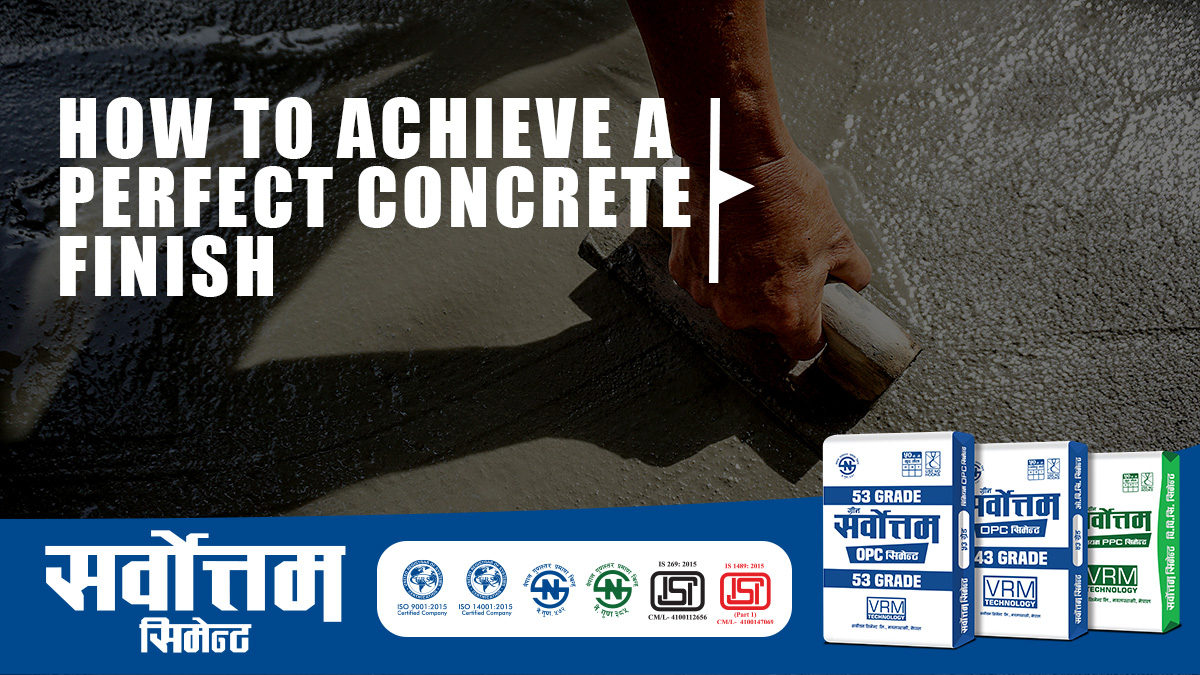
How to Achieve a Perfect Concrete Finish
Introduction
A perfect concrete finish is not just about appearance—it directly affects strength, durability, safety, and long-term performance. Whether you are constructing floors, driveways, terraces, slabs, or industrial surfaces in Nepal, achieving a smooth and durable finish requires the right cement, correct mix proportions, proper techniques, and adequate curing.
This guide explains step-by-step how to achieve a professional concrete finish, suitable for both small residential projects and large commercial works.
Step 1: Choose the Right Cement
High-quality cement is the foundation of a strong and smooth concrete surface.
- OPC 43 or OPC 53: Ideal for structural slabs and heavy-load areas
- PPC Cement: Best for residential floors and moisture-prone areas due to better workability and durability
Always ensure the cement meets Nepal Standards (NS) and is used within 90 days of manufacture.
Step 2: Mix Concrete Accurately
Correct mix proportions and water content are critical for workability and strength.
Recommended Mix & Water Ratio
- General concrete mix: 1:2:4 (cement: sand: coarse aggregate)
- Water–cement ratio: 0.45–0.50 for floors and driveways
Too much water weakens concrete, while too little water makes finishing difficult.
Ensure thorough mixing to avoid weak spots or uneven texture.
Step 3: Pour and Level the Concrete Properly
- Pour concrete continuously to prevent cold joints
- Use straightedges, screeds, and floats to level the surface
- Begin finishing once the concrete is firm enough and surface water has evaporated
Local Tip: In hot or dry weather, work quickly and protect the surface from rapid moisture loss.
Step 4: Skilled Concrete Finishing Techniques
Proper finishing enhances both appearance and durability.
Common Finishing Methods
- Floating: Smooths the surface and compacts the top layer
- Trowelling: Provides a dense, smooth final finish
- Edging: Prevents corner chipping and creates clean edges
For decorative or large slabs, experienced finishers are recommended to ensure uniform results.
Step 5: Proper Curing for Long-Term Strength
Curing is one of the most important steps in achieving a perfect concrete finish.
Curing Guidelines
- Keep concrete moist for 7–14 days
- Use water sprinkling, wet burlap, or plastic sheets
- Avoid early loading or traffic on fresh concrete
Proper curing allows cement hydration to continue, increasing strength and reducing cracks.
Common Mistakes to Avoid
1. Overwatering the Mix
Excess water reduces strength and increases cracking.
2. Finishing Too Early or Too Late
Incorrect timing leads to weak surfaces or uneven finish.
3. Improper or Insufficient Curing
Skipping curing causes shrinkage cracks and reduces durability.
4. Overworking the Surface
Excessive trowelling pushes water to the surface, weakening the top layer.
5. Using Old or Poor-Quality Cement
Cement older than 90 days or exposed to moisture compromises concrete performance.
Extra Tips for a Professional Finish
- Use surface sealants for stain and weather resistance
- Consider polishing, stamping, or exposed aggregate for decorative concrete
- Adjust curing methods based on Nepal’s climate and weather conditions
Why Quality Cement Makes the Difference
Using cement from a trusted manufacturer like Sarbottam Cement ensures:
- Uniform texture and consistent strength
- Better workability and smoother finish
- Compliance with Nepal Standards
- Reliable performance across all applications
Conclusion
Achieving a perfect concrete finish requires attention to detail at every stage—from selecting the right cement and maintaining accurate mix ratios to skilled finishing and proper curing.
By following these steps and using certified, high-quality cement, you can create concrete surfaces that are smooth, strong, durable, and built to last, even under Nepal’s demanding conditions.


