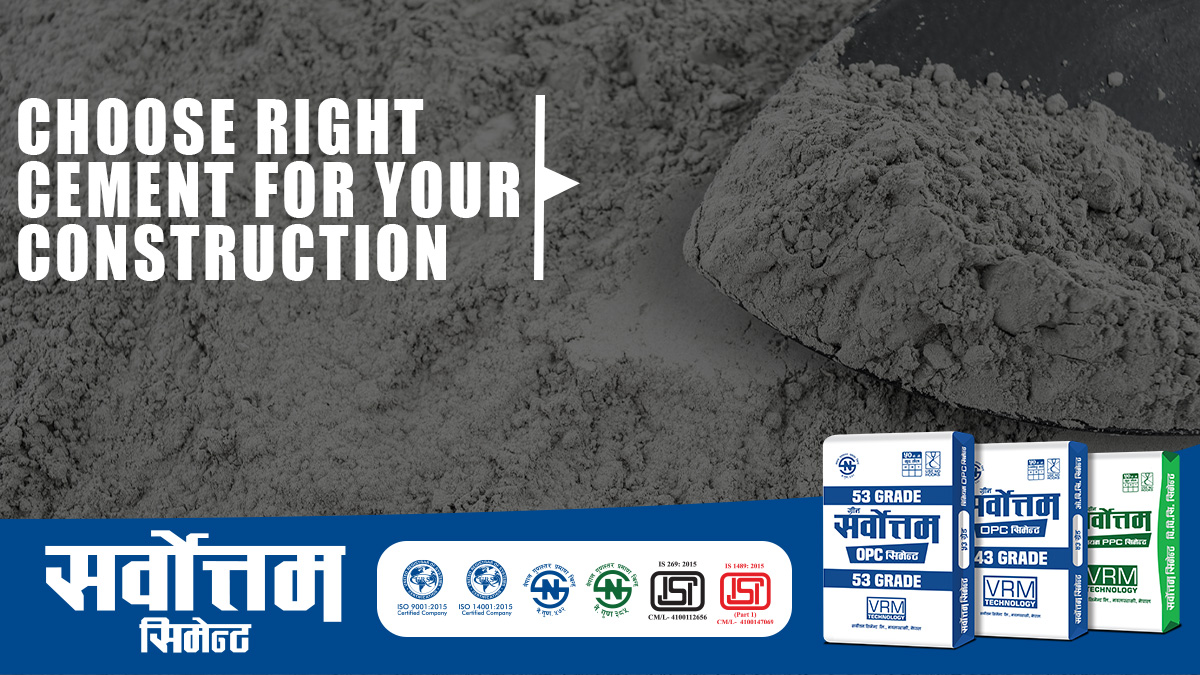
How to Choose the Right Cement for Your Construction Project
Introduction
Choosing the right cement is one of the most important decisions in any construction project. Whether you are building a house, renovating walls, or starting a commercial structure, selecting the wrong cement can lead to cracks, weak strength, faster deterioration, and unnecessary repair costs.
This guide explains how to choose the right cement OPC or PPC based on your construction needs, in a simple, practical way that anyone can understand.
Why Cement Selection Matters
Different parts of a building experience different loads, moisture conditions, and exposure levels. Cement types are designed to perform differently under these conditions.
Using the correct cement ensures:
- Structural safety
- Long-term durability
- Better surface finish
- Cost efficiency
Understand What You Are Building
Structural (Load-Bearing) Construction Works
These parts carry the weight of the building:
- Columns
- Beams
- Slabs
- Foundations
- RCC structures
Best Choice: OPC 53 Grade
- Rapid early strength gain
- Suitable for heavy loads
- Ideal for multi-storey buildings
- Helps speed up construction timelines
Medium-Strength Structural & General Works
These include:
- Small residential buildings
- Medium-load beams and slabs
- Flooring and pavements
- RCC works where extreme early strength is not required
Best Choice: OPC 43 Grade
- Balanced early and long-term strength
- Better crack control than OPC 53
- Easier workability
- More economical for residential projects
General-Purpose & Non-Structural Works
These include:
- Brick masonry
- Internal and external walls
- Plastering
- Non-load-bearing elements
Best Choice: PPC Cement
- Smooth workability
- Better surface finish
- Lower heat of hydration
- Reduced shrinkage cracks
- Strong long-term durability
Consider Site Conditions and Climate
Areas with High Moisture or Water Exposure
Examples:
- Bathrooms and kitchens
- Water tanks and basements
- Wet or humid regions
Recommended Cement: PPC Cement
- PPC offers better resistance to moisture and chemical attack due to pozzolanic materials like fly ash.
Dry Regions or Fast Construction Requirements
Recommended Cement: OPC 43 or OPC 53
- OPC gains strength faster and is ideal for RCC and structural works.
Check the Quality of the Cement Brand
Even the right cement type can fail if the brand quality is poor.
Manufacturing Technology Matters
Cement quality depends heavily on how it is manufactured.
Sarbottam Cement uses European Vertical Roller Mill (VRM) technology, which ensures:
- Uniform particle size
- Higher compressive strength
- Better plaster and masonry finish
- Lower energy consumption
- Consistent quality in every bag
Certifications to Look For
Always check for:
- NS 572 (OPC)
- NS 385 (PPC)
- ISO 9001 (Quality Management)
- ISO 14001 (Environmental Management)
These certifications confirm safety, durability, and consistency.
Brand Reputation and Reliability
Before choosing cement, consider:
- Engineer and contractor recommendations
- Usage in government or large infrastructure projects
- Stable supply chain
Sarbottam Cement is widely used in:
- Hydropower projects
- Airports
- High-rise buildings
- Government and public infrastructure
Conclusion
Choosing the right cement is not complicated if you follow a few basic rules:
- Use OPC 53 for heavy structural work
- Use OPC 43 for general construction
- Use PPC for plastering, masonry, and wet areas
- Always choose a certified, technology-driven cement brand
By selecting the correct cement type and a trusted manufacturer, you ensure safe, durable, and long-lasting construction.
Frequently Asked Questions (FAQs)
1. Which cement is best for RCC construction?
OPC 53 Grade is best for RCC work due to high early strength.
2. Which cement is suitable for plastering and masonry?
PPC cement is preferred for plastering and masonry because of better workability and finish.
3. What is the difference between OPC 43 and OPC 53?
OPC 53 gains strength faster, while OPC 43 offers balanced strength and better crack control.
4. Which cement should be used in wet or humid areas?
PPC cement performs better in moisture-prone areas like bathrooms and basements.
5. Why is cement manufacturing technology important?
Advanced technology like VRM ensures consistent strength, uniform quality, and better on-site performance.


