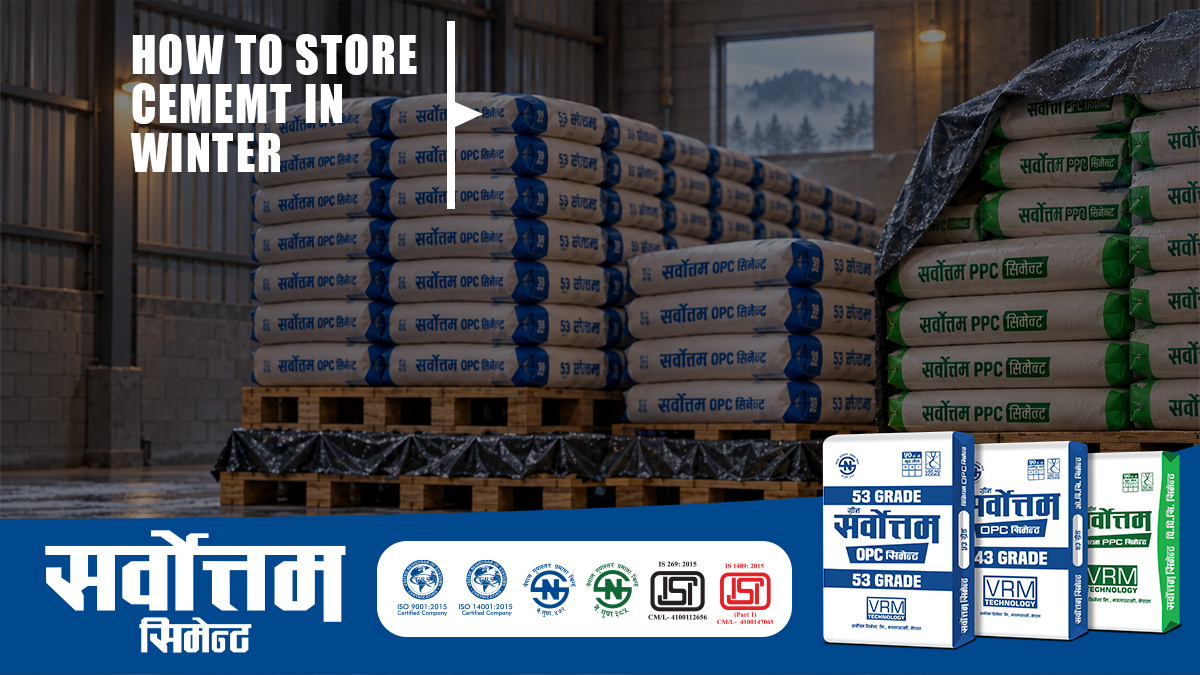
How to Store Cement in Winter: Moisture and Stock Management
Winter is right around the corner, making this a good time to review how cement is delivered, stored and issued at your construction site. Before the next batch arrives, ask a simple question: is your storage area ready to keep the bags dry and your stock organised?
For homeowners, contractors and building-material suppliers in Nepal, buying cement is only part of the job. Protecting it until use matters too. Whether your project uses Sarbottam OPC Cement or Sarbottam PPC Cement, careful handling and stock management help avoid damaged bags, unnecessary purchases and interruptions to work.
This guide explains how to store cement in winter, organise deliveries and recognise stock that needs further assessment.
Quick Answer: How Should Cement Be Stored in Winter?
Keep unopened cement bags in a dry, weatherproof storage area, raised off the floor and away from damp walls. Protect packaging, inspect deliveries and use older suitable stock first. Keep suspect bags separate and follow the manufacturer's storage and handling instructions.
Winter does not make cement immune to moisture. Depending on the site, fog, dew, leaks, damp floors or condensation may create exposure even when there is little rainfall. Review actual storage conditions rather than assuming every location in Nepal faces the same winter risks.
Why Moisture Protection Matters for Cement
Cement reacts with water during hydration. This reaction is useful when producing concrete or mortar, but unwanted moisture exposure during storage can cause deterioration before the cement is used.
A roof alone does not guarantee dry storage. Inspect the floor, walls, doors and packaging as well. Keep bags away from wet sand, curing water and washing activities.
Sarbottam cement storage should be treated as part of site quality management, alongside material selection, batching and workmanship.
1. Prepare a Dedicated Storage Area Before Delivery
Assign a protected area for cement instead of finding space after the truck arrives. Inspect it for roof leaks, standing water, damp corners and routes through which water could enter.
Plan three clearly marked zones:
- Usable stock: accepted bags ready for issue.
- Incoming stock: bags awaiting inspection and recording.
- Hold stock: damaged or uncertain bags awaiting assessment.
This arrangement makes it harder for an unchecked delivery to enter the daily work supply. On smaller sites, labels and separate pallets can serve the same purpose as separate rooms.
2. Keep Cement Bags Off the Floor and Away From Damp Walls
Place bags on sound, dry pallets or a suitable raised platform. Do not rely on a thin sheet over a damp floor as the entire storage solution.
Maintain clearance from walls so staff can inspect the area and spot water entry. Check the platform's condition before loading it, especially if it has been used outdoors.
Follow the manufacturer's stacking instructions and the site's handling rules. Keep stacks stable and accessible; avoid excessive heights that damage packaging or create a handling hazard.
3. Protect Bags During Unloading and Movement
Good storage starts at delivery. A dry store cannot reverse exposure that occurred in transit or during unloading.
Before accepting Sarbottam OPC Cement or Sarbottam PPC Cement, check the product designation, printed date or batch information, quantity and packaging condition against the order.
Record torn bags, wet patches and other concerns before mixing the delivery into existing stock. Use handling methods that avoid puncturing packaging, and transfer accepted bags promptly to the prepared area.
Keep the unloading route clear so bags are not left waiting beside puddles or on exposed ground.
4. Use Covers Without Trapping Existing Moisture
A suitable moisture-resistant cover can provide additional protection, but it should not replace a weatherproof store. Check that bags and the platform are dry before covering them.
If moisture appears under a cover, investigate its source. Simply adding another layer does not address a leaking roof, damp floor or wet packaging.
Keep doors closed when they are not needed for access, and manage ventilation according to the storage conditions. The aim is to keep the stock dry rather than assume that more outside airflow is always better.
5. Follow First-In, First-Out Stock Management
First-in, first-out, or FIFO, means issuing older suitable stock before newer deliveries. It works only when dates are recorded and older bags remain accessible.
For Sarbottam cement stock management, maintain a simple register:
Record : What to enter
Receipt date : Date the delivery reached the site
Product : Sarbottam OPC, Sarbottam PPC or exact designation on the bag
Batch/date details : Information printed on the packaging
Quantity received : Number of bags accepted
Storage position : Room, pallet or stack label
Quantity issued : Bags released for work
Quantity on hold : Bags awaiting assessment
Usable balance : Accepted bags remaining after issues and holds
FIFO is not permission to use damaged stock. Condition and suitability take priority over the receipt date.
6. Match Purchases to the Winter Work Schedule
Avoid buying a large quantity only because there is spare space or an attractive quotation. Discuss the construction schedule with the contractor and estimate consumption for upcoming activities.
Ask the supplier about delivery lead time, transport arrangements and whether phased deliveries are practical. Compare quotations on a consistent basis, including product type, quantity, delivery and applicable charges.
For example, if work is postponed, review planned deliveries before another load arrives. Keeping procurement aligned with progress helps reduce storage pressure and makes older stock easier to manage.
Homeowners comparing cement price in Nepal should consider the complete purchase and handling process, alongside the quoted price per bag.
7. Separate OPC and PPC Stock Clearly
Label different cement products and keep them identifiable. Do not allow staff to issue whichever bag is nearest when the work specification calls for a particular product.
Store Sarbottam OPC Cement and Sarbottam PPC Cement with their original product information intact. Product selection for concrete, masonry or plastering should follow the project specification and engineering advice.
Being in storage during winter does not change the approved material requirement.
8. Manage Opened Bags Carefully
Open bags only when needed and plan work to minimise leftovers. If a partial bag remains, identify its product and opening date, protect it from moisture and arrange assessment before reuse where necessary.
Do not combine unidentified leftovers with fresh cement. Keep the bag information available, and follow manufacturer guidance on handling opened stock.
Staff should also follow the bag's safety instructions when handling cement powder, including suitable protection from dust and skin contact.
9. What Should You Do With Lumpy or Wet Cement?
Separate bags with wet packaging, hard lumps or uncertain exposure history. Ask the supplier or responsible engineer to assess their suitability and determine whether testing is required.
Do not assume that crushing lumps restores cement performance. Likewise, a bag that looks normal is not automatically proof of compliance or strength.
Avoid assigning suspect cement to foundations, columns, beams or slabs without appropriate assessment. Record the decision so the same bag is not later issued by mistake.
How Long Can Cement Be Stored?
Follow the guidance printed on the bag and current manufacturer instructions. Storage duration alone cannot establish suitability: packaging condition and exposure history also matter.
Sarbottam's existing cement-quality guide recommends using cement within approximately three months of manufacture. Treat this as a procurement planning guide, not a guarantee that every younger bag is suitable or that every older bag is automatically unusable. Older or questionable stock may require assessment and testing. [1]
A Practical Winter Storage Plan for Your Site
Storage instructions are easier to follow when responsibility is clear. Before winter deliveries begin, decide who will inspect bags, update the register and authorise stock issues. On a small house-building site, one person may handle all three tasks. On a larger project, the storekeeper and supervising engineer may share responsibility.
Before a delivery
Review the usable balance and expected consumption. Confirm that the ordered product matches the next construction activity, and check whether the delivery area and storage platform are ready. Tell the supplier about access restrictions or unloading arrangements before the truck leaves.
At receipt
Compare the delivery with the order. Record accepted quantities separately from bags placed on hold. Photograph any visible delivery concerns and retain the invoice, batch information and communication with the supplier. These records make later queries easier to resolve.
At issue
Record the product, number of bags, intended activity and person receiving them. Keep the record simple enough that staff will actually maintain it. If work is postponed after bags have been issued, reconcile the unused quantity rather than assuming all issued stock was consumed.
At the end of the week
Count the usable balance, review held stock and compare actual consumption with the work plan. Investigate discrepancies before placing another order. A weekly review is a suggested management routine; additional checks may be needed after leaks, handling incidents or weather exposure.
Worked Example: Managing Sarbottam Cement Stock
Consider an illustrative site with 120 accepted bags of one specified Sarbottam cement product. Workers receive 35 bags for an approved activity. A later inspection identifies five remaining bags with uncertain exposure, so they are transferred to the hold area.
Stock movement : Bags
Accepted opening stock : 120
Issued to work : 35
Remaining physical stock : 85
Transferred to hold : 5
Usable stock available for planning : 80
The site still physically holds 85 bags, but only 80 are available for issue pending assessment. This distinction matters when checking whether the next activity has enough material.
If the work plan estimates a requirement of 100 bags of the same specified product, the immediate difference is 20 bags. The final order should also consider the approved quantity estimate, realistic delivery lead time and any justified buffer. Do not automatically include held bags or a different cement product in the available balance.
This is a stock-accounting example, not a concrete mix design or a recommendation for how many bags a particular structure needs.
Storage Risks to Check Across Different Sites in Nepal
A useful winter inspection should follow the conditions actually observed at the site. A city warehouse, a partially built house and a remote construction camp may need different arrangements.
Site condition observed : Suggested management response
Moisture on the floor beneath stock : Investigate the source and move affected bags to a dry prepared area; identify suspect stock separately
Fog or dew exposure during unloading : Reduce the time bags spend exposed and inspect packaging before acceptance
Water droplets under a cover or on the roof underside : Investigate condensation or leakage rather than assuming an additional cover resolves it
Limited access or uncertain delivery lead times : Coordinate deliveries with the supplier and base a stock buffer on actual logistics
Construction paused for several weeks : Reconcile stock, inspect the store and reassess upcoming deliveries before work resumes
Several products stored together : Use separate labels and issue records for each product designation
Storage Quality and Concrete Strength Are Different Checks
A well-managed store helps protect bagged cement, but it does not establish the performance of finished concrete. Concrete strength also depends on its specified mix, materials, batching, placement and curing.
Cold-weather concreting requires a separate plan. The American Concrete Institute identifies protection against early freezing, suitable curing conditions and adequate strength before formwork removal among its objectives for cold-weather work. Do not interpret good cement storage as permission to pour concrete without checking the weather and the engineer's requirements. [3]
Likewise, colour, a hand-feel check or an informal water test cannot establish compliance with a cement strength specification. Use these observations only to flag concerns; appropriate sampling and laboratory testing may be required to resolve suitability questions.
When evaluating cement for house construction in Nepal, request information for the exact product supplied. Keep storage guidance, product documentation and the project's material requirements together so decisions can be traced.
What to Ask Before Ordering Sarbottam Cement
A specific enquiry is more useful than asking only for the cheapest cement price in Nepal. Include the following details when contacting Sarbottam Cement or a supplier:
- The exact product designation required by the project.
- Delivery location and site access arrangements.
- Estimated quantity and the date it is needed.
- Whether phased deliveries would help the work schedule.
- Product-specific storage and handling instructions.
- The documents or bag information needed for acceptance.
- The process for reporting damaged packaging at delivery.
Request a quotation that clearly states what is included. Transport, unloading, applicable charges and delivery arrangements should be understood before confirming an order. Do not assume every dealer offers the same terms.
For Sarbottam OPC Cement and Sarbottam PPC Cement enquiries, use the official Sarbottam Cement website to request product information and dealer assistance. Clear information at purchase makes stock management easier after delivery.
Winter Cement Storage Checklist
Before accepting the next delivery, confirm that:
- The store is dry and protected from weather.
- Pallets or platforms are sound and dry.
- Bags will remain clear of damp floors and walls.
- Product labels and batch details can be recorded.
- Older suitable stock is accessible.
- Damaged bags have a separate hold area.
- Planned purchases match upcoming work.
- Staff know who can release held stock.
Repeat the inspection after water entry, delivery damage or an extended work stoppage.
Prepare Your Sarbottam Cement Stock Before Winter
Preparing storage now can make daily construction work easier when winter arrives. A labelled pallet, an accurate register and a clear delivery plan are practical steps that help prevent avoidable material losses.
Whether you are planning your first home or managing a larger construction site, include storage readiness in your cement buying decision. Protect Sarbottam OPC Cement and Sarbottam PPC Cement from delivery through to issue, and select each product according to the project's requirements.
Planning a winter construction project? Contact Sarbottam Cement for product information and dealer assistance. Ask about the appropriate product designation, local availability and delivery options before placing your order.
Visit Sarbottam Cement or use the Contact Us page on the official website to make an enquiry.
Frequently Asked Questions About Winter Cement Storage
1. What is the best way to store cement in winter in Nepal?
Use a dry, weatherproof store with a suitable raised platform, identifiable bags and organised stock records. Inspect deliveries and keep uncertain bags separate. Follow the instructions for the product supplied rather than assuming one stacking or shelf-life rule applies to every cement bag.
2. Can cement bags be stored directly on a concrete floor?
Avoid direct floor contact. A floor can appear dry at the surface while the storage area still has moisture problems. Use a sound, dry raised platform and check the area around it. A protective sheet alone should not replace assessment of floor dampness and water entry.
3. Can I store cement outdoors if winter rainfall is low?
Low rainfall does not eliminate exposure from dew, ground moisture, damaged covers or unexpected water entry. Prefer a protected indoor store. If a temporary outdoor arrangement is unavoidable, agree on suitable protection with the responsible site personnel and minimise storage time according to manufacturer guidance.
4. Is covering bags with plastic enough to protect cement?
A cover is an additional layer of protection, not proof of safe storage. Inspect the roof, platform, packaging and surrounding area as well. Check for moisture underneath the cover; covering already damp stock does not restore its condition.
5. How high should I stack Sarbottam cement bags?
Use the manufacturer's current stacking guidance for the packaging supplied, together with the site's handling and platform requirements. Avoid choosing an arbitrary height from a general blog. Stable stacks, intact packaging and safe access should guide the arrangement.
6. Does winter cold affect stored cement in the same way as fresh concrete?
These are different issues. Bagged cement requires protection from moisture and packaging damage. Fresh concrete additionally needs appropriate temperature protection and curing during strength development. Your engineer should plan cold-weather concrete work separately from the cement storage arrangement. [3]
7. Can I use cement more than three months after manufacture?
Sarbottam's published quality guide recommends use within approximately three months. Age should trigger careful stock planning and review, but it cannot establish suitability on its own. Follow current product instructions and seek assessment or testing when the cement is older or its exposure history is uncertain. [1]
8. Is cement automatically safe if it is less than three months old?
No. Recent stock can still have damaged packaging or a history of moisture exposure. Check the product identification, bag condition and storage history. Manufacturing date is one acceptance consideration, not a substitute for all the others.
9. What should I do if cement bags arrive wet or torn?
Record the condition at delivery, photograph the concern and separate the affected bags. Contact the supplier before accepting them as usable stock. Retain delivery and batch details so the issue can be investigated, and follow the agreed assessment process.
10. Can I crush lumps and use the cement for plastering?
Do not treat crushed lumps as evidence that the cement's performance has been restored. Keep questionable stock on hold and obtain assessment for its intended use. Assigning suspect cement to plastering instead of concrete does not remove the need to establish suitability.
11. What does FIFO mean for cement storage?
FIFO means first-in, first-out: older suitable stock is issued before newer stock. Record dates and keep older deliveries accessible. FIFO applies within the relevant product designation and only to stock accepted for use; it does not override a hold decision.
12. Should Sarbottam OPC and Sarbottam PPC be stored together?
They may share a suitable store, but keep them clearly separated and labelled. Use distinct stock records and issue the product specified for the work. Staff should never substitute one for the other merely because it is closer to the door or older.
13. How should I handle a partially used cement bag?
Minimise leftovers by opening bags according to the immediate work requirement. Keep any remainder identifiable and protected, record when it was opened and follow manufacturer guidance before reuse. Do not mix unidentified remnants into a fresh bag.
14. What if construction stops during winter?
Count and label the remaining stock, review incoming orders and assign someone to inspect the store during the pause. When work restarts, check the product information, exposure history and bag condition before releasing stock. A closed site still needs material oversight.
15. How can I reduce cement wastage without compromising quality?
Coordinate purchasing with the work schedule, protect deliveries, record issues and investigate discrepancies. Keep held stock out of the usable balance. Saving money should come from avoiding preventable losses and unnecessary purchases, not from using material whose suitability is unresolved.
16. Where can I check Sarbottam cement price and request a quotation?
Start with the official Sarbottam Cement website and its Contact Us route. Provide the required product, quantity, delivery location and date. Request confirmation of local availability and quotation terms rather than relying on an undated price found online.


