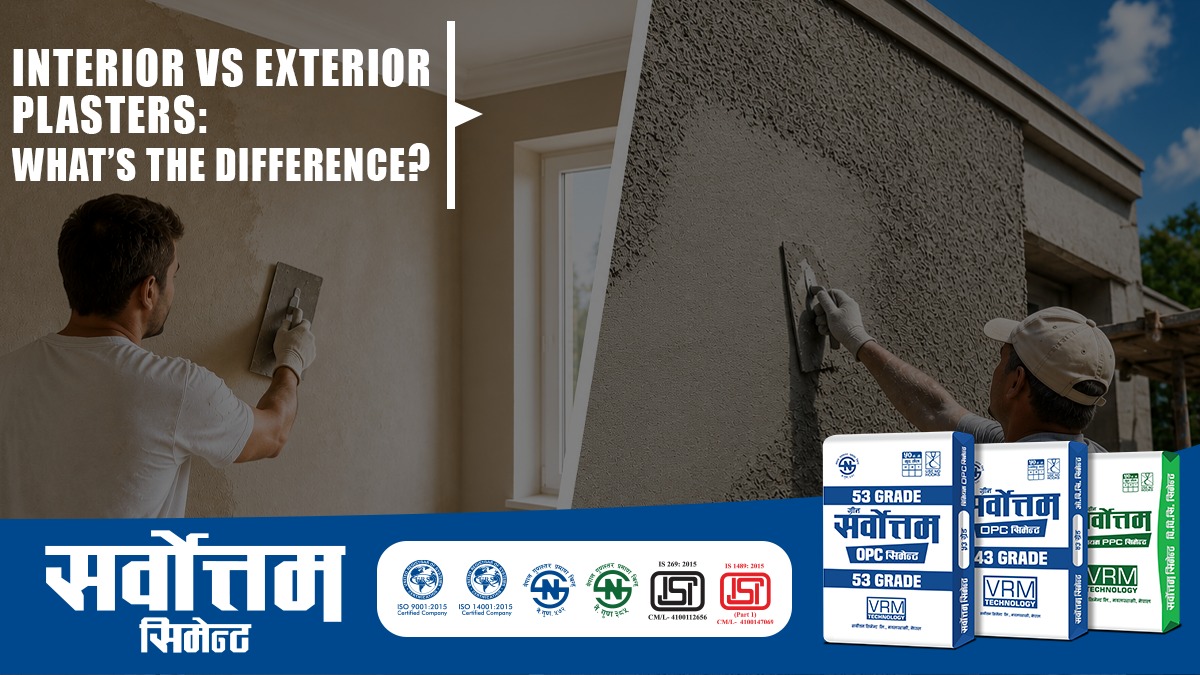
Interior vs Exterior Plaster: Key Differences, Best Cement & Expert Tips for Durable Walls in Nepal
Plastering is one of the most critical stages in house construction because it directly affects wall strength, durability, waterproofing, and finishing quality. Many homeowners and builders in Nepal assume interior plaster and exterior plaster are the same, but they are designed for completely different purposes.
Using the wrong plaster mix or low-quality cement can lead to:
- Wall cracks
- Dampness and seepage
- Peeling paint
- Weak wall bonding
- Reduced building lifespan
In Nepal’s monsoon climate, choosing the right plastering method and high-quality cement is essential for long-lasting construction.
Whether you are building a new home, renovating walls, or planning exterior finishing, understanding the difference between interior and exterior plaster helps ensure stronger and more durable walls.
What Is Plaster in Construction?
Plaster is a protective coating made from cement, sand, and water that is applied over brickwork or concrete surfaces. It creates a smooth, durable, and protective layer on walls and ceilings.
Main Functions of Plaster
- Protects walls from weather damage
- Improves wall strength and durability
- Creates a smooth surface for paint and finishes
- Prevents moisture penetration and seepage
- Covers uneven brick and concrete surfaces
- Enhances the overall appearance of the building
In Nepal, proper plastering is especially important due to heavy rainfall, humidity, and temperature variation.
What Is Interior Plaster?
Interior plaster is applied to the inside walls and ceilings of a building. Its primary focus is smooth finishing, aesthetics, and creating a strong base for paint and decorative coatings.
Purpose of Interior Plaster
- Provides smooth wall finishing
- Improves interior appearance
- Covers imperfections in masonry work
- Creates an ideal surface for painting
- Enhances room aesthetics and brightness
Materials Used for Interior Plaster
Interior plaster generally uses:
- Cement (mostly PPC or OPC 43 Grade)
- Fine sand for smooth finishing
- Clean water
For premium finishing, high-quality cement with good workability is recommended.
Characteristics of Interior Plaster
- Smooth and even texture
- Thin application layer
- Better finishing quality
- Easier paint application
- Less exposure to environmental stress
Common Interior Plaster Problems
Hairline Cracks
Usually caused by improper curing or excess water in the mortar mix.
Damp Patches
Often occur because of plumbing leakage or moisture seepage.
Peeling Paint
Poor-quality plaster or trapped moisture weakens paint adhesion.
What Is Exterior Plaster?
Exterior plaster is applied on the outer surface of buildings. Since exterior walls are exposed to rain, sunlight, dust, wind, and temperature changes, this plaster must be stronger and more weather-resistant.
Purpose of Exterior Plaster
- Protects buildings from harsh weather
- Prevents water seepage and dampness
- Improves structural durability
- Increases wall lifespan
- Provides a strong base for exterior paint
Materials Used for Exterior Plaster
Exterior plaster typically uses:
- PPC cement or weather-resistant cement
- Coarse sand for strength
- Waterproofing additives (when required)
- Proper curing water
Characteristics of Exterior Plaster
- High durability
- Strong bonding strength
- Better moisture resistance
- Thicker application layer
- Improved crack resistance
Common Exterior Plaster Problems
Water Seepage During Monsoon
Occurs when poor-quality cement or improper plastering techniques are used.
Surface Cracks
Thermal expansion and rapid drying often cause cracking.
Surface Erosion
Low-quality plaster gradually weakens under weather exposure.
Best Cement for Interior Plaster in Nepal
For interior walls, workability and smooth finishing are more important than extremely high strength.
Recommended Cement Types
PPC Cement
Widely preferred for smooth finishing and reduced shrinkage cracks.
OPC 43 Grade Cement
Provides balanced strength and finishing performance.
Why PPC Cement Is Preferred for Interior Plaster
- Better workability
- Smooth wall finish
- Lower heat generation
- Reduced shrinkage cracking
- Easier application
Using premium-quality PPC cement helps achieve crack-resistant and long-lasting wall finishes.
Best Cement for Exterior Plaster in Nepal
Exterior plaster requires strong bonding, weather resistance, and long-term durability.
Recommended Cement Types
PPC Cement
Most commonly used for residential and commercial plastering.
OPC 43 Grade Cement
Suitable where higher early strength is required.
Why PPC Cement Performs Better for Exterior Walls
- Better moisture resistance
- Improved durability during monsoon
- Reduced surface cracking
- Better long-term performance
- Suitable for Nepal’s changing climate conditions
For long-lasting exterior walls, using reliable cement with proper curing is essential.
Common Plastering Mistakes in Nepal
1. Using Excess Water in Mortar
Too much water weakens plaster strength and increases shrinkage cracks.
2. Poor Curing Practices
Insufficient curing reduces bonding strength and durability.
3. Using the Wrong Cement Type
Improper cement selection can affect finish quality and crack resistance.
4. Uneven Plaster Thickness
Leads to hollow patches and weak wall surfaces.
5. Ignoring Weather Conditions
Plastering during heavy rain or extreme heat reduces plaster performance.
Why Plaster Cracks After Construction
Plaster cracks are common in Nepal due to construction and environmental factors.
Major Causes of Plaster Cracks
- Improper curing
- Fast drying of plaster
- Structural movement
- Weak cement-sand ratio
- Excess water in the mix
- Temperature fluctuations
- Poor workmanship
Using high-quality cement and proper plastering techniques significantly reduces crack formation.
How to Prevent Plaster Damage
Best Practices for Durable Plaster
Use the Correct Cement-Sand Ratio
Common plastering ratios:
- 1:4 for stronger surfaces
- 1:6 for standard plaster work
Maintain Proper Curing
Keep plaster moist for at least:
- Minimum: 7 days
- Ideal: 10–14 days
Avoid Excess Water
Maintain proper mortar consistency for stronger bonding.
Use Quality Cement and Sand
Good materials improve durability, finishing, and crack resistance.
Apply Uniform Thickness
Even plaster application prevents hollow areas and weak spots.
Avoid Extreme Weather During Plastering
Very hot or rainy conditions reduce plaster quality.
Why Quality Cement Matters for Plastering
The quality of cement directly affects:
- Wall strength
- Surface smoothness
- Crack resistance
- Waterproofing performance
- Paint durability
- Long-term structural protection
For reliable plastering performance in Nepal, builders prefer cement that offers:
- Strong bonding
- Smooth workability
- Reduced cracking
- Better durability during monsoon
Interior vs Exterior Plaster: Which Is More Important?
Both types of plaster are equally important because they serve different purposes.
Interior Plaster Helps With
- Smooth wall finishing
- Better aesthetics
- High-quality paint application
- Comfortable indoor appearance
Exterior Plaster Helps With
- Weather protection
- Waterproofing
- Structural durability
- Long-term wall strength
A durable building requires both properly executed interior and exterior plaster systems.
Conclusion
Interior and exterior plaster are not the same. Interior plaster focuses on smooth finishing and aesthetics, while exterior plaster protects buildings from harsh environmental conditions.
In Nepal’s climate, selecting the right cement and following proper plastering practices are essential for long-lasting walls and reduced maintenance costs.
For durable and crack-resistant plastering:
- Use quality PPC or OPC 43 Grade cement
- Maintain proper curing
- Follow correct cement-sand ratios
- Avoid excess water in the mix
- Ensure skilled workmanship
A properly plastered building provides:
- Stronger walls
- Better waterproofing
- Improved paint life
- Enhanced structural durability
- Long-term protection against Nepal’s weather conditions
Frequently Asked Questions (FAQs)
What is the main difference between interior and exterior plaster?
Interior plaster focuses on smooth finishing and aesthetics, while exterior plaster is designed for weather protection and durability.
Which cement is best for plastering in Nepal?
PPC cement is widely preferred because of its smooth finish, durability, and reduced cracking performance.
Why does plaster crack after construction?
Common reasons include poor curing, excess water, temperature changes, weak mortar mix, and poor workmanship.
Can OPC cement be used for plastering?
Yes. OPC 43 Grade cement can be used for plastering, although PPC cement is generally preferred for better workability and crack resistance.
How long should plaster curing be done?
Plaster should be cured for at least 7 days, while 10–14 days is recommended for better durability and strength.
Is waterproofing necessary for exterior plaster?
In high-rainfall regions of Nepal, waterproofing additives can improve resistance against seepage and dampness.
Which plaster is more durable?
Exterior plaster is generally stronger and more durable because it is designed to resist weather exposure and moisture.


