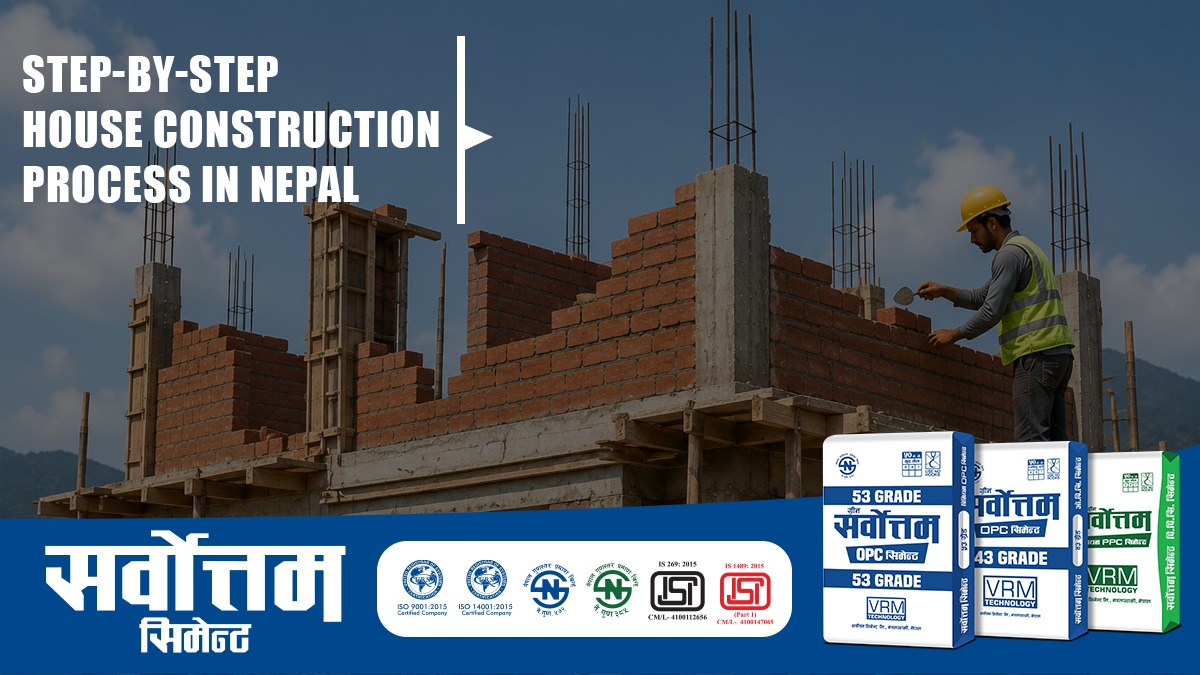
Step-by-Step House Construction Process in Nepal: Complete Guide for Strong, Durable & Earthquake-Resistant Homes
Building a house is one of the biggest financial and emotional investments for any family. In Nepal, where buildings must withstand earthquakes, heavy monsoon rainfall, temperature variation, and long-term structural load, following the correct house construction process is essential for safety and durability.
A strong home is not built only with bricks and concrete. It requires proper planning, engineering supervision, high-quality materials, and the right cement for each construction stage.
From site preparation and foundation work to RCC construction, brick masonry, plastering, and finishing, every stage directly affects the lifespan and strength of the building.
This complete house construction guide in Nepal explains each stage of the home building process while helping homeowners understand where OPC 43 Grade, OPC 53 Grade, and PPC cement are commonly used for better construction performance.
Why Proper House Construction Matters in Nepal
Nepal is located in a high seismic region, making earthquake-resistant construction extremely important. Poor workmanship, low-quality cement, improper RCC work, and inadequate curing can seriously reduce structural strength.
Weak construction practices may lead to:
- Structural cracks
- Water leakage
- Weak concrete strength
- Damp walls
- Roof seepage
- Reduced earthquake resistance
- High repair and maintenance costs
A properly planned and engineered building provides:
- Better structural stability
- Long-lasting concrete durability
- Improved waterproofing
- Safer RCC structures
- Reduced future maintenance
- Better resistance against Nepal’s climate conditions
Using the best cement in Nepal during construction plays a major role in improving building strength, durability, and long-term safety.
1. Site Preparation and Land Inspection
Proper site preparation is the first and one of the most important stages of house construction in Nepal. A well-prepared site helps prevent future structural settlement and drainage problems.
Site Preparation Includes
- Land surveying
- Soil testing
- Site clearing
- Ground leveling
- Boundary marking
- Temporary electricity and water setup
Importance of Soil Testing in Nepal
Soil quality directly affects foundation stability. Weak or loose soil can cause:
- Uneven settlement
- Structural cracks
- Foundation failure
- Long-term building damage
Professional soil testing helps determine:
- Soil bearing capacity
- Groundwater conditions
- Required foundation depth
- Suitable structural design
This step is especially important for earthquake-resistant house construction in Nepal.
Common Site Preparation Mistakes
Many future structural problems begin during the early stages of construction.
Common mistakes include:
- Ignoring soil testing
- Poor drainage planning
- Uneven site leveling
- Starting work without engineering drawings
Proper site planning improves both safety and long-term durability.
2. Foundation Construction
The foundation transfers the entire building load safely into the ground. A strong foundation is essential for durable and earthquake-resistant homes in Nepal.
Foundation Construction Process
Excavation
The ground is excavated according to structural drawings and soil conditions.
PCC (Plain Cement Concrete)
A PCC layer is placed below the footing to create a stable and level surface.
Reinforcement Placement
Steel reinforcement bars are tied according to structural engineering specifications.
Important checks include:
- Proper spacing
- Correct lap length
- Adequate concrete cover
- Rust-free reinforcement bars
Footing Concrete Casting
Concrete is poured into the footing using the correct mix ratio and vibration methods to eliminate air voids.
Best Cement for Foundation Construction in Nepal
Foundation work requires:
- High compressive strength
- Strong bonding
- Better load-bearing performance
- Long-term durability
Recommended Cement: Sarbottam OPC 53 Grade Cement
Sarbottam OPC 53 Grade Cement is widely used in heavy RCC and foundation work because it provides:
- High early strength
- Strong structural bonding
- Better compressive strength
- Excellent RCC performance
It is commonly used for:
- Foundations
- RCC columns
- Beams
- Structural concrete works
- High-load construction areas
Internal backlink opportunities:
- Best OPC Cement in Nepal
- Best Strength Cement in Nepal
- 53 Grade OPC Cement Uses
3. RCC Work (Reinforced Cement Concrete)
RCC work forms the structural skeleton of the building and directly affects earthquake resistance, load-bearing capacity, and structural durability.
RCC Components Include
- Columns
- Beams
- Slabs
- Staircases
- Lintels
Proper RCC construction is critical for safe residential construction in Nepal.
RCC Construction Guide for Nepal
Step 1: Formwork and Shuttering
Temporary molds are prepared to hold fresh concrete in shape until it gains strength.
Good formwork should be:
- Properly aligned
- Leak-proof
- Strong and stable
Poor formwork can lead to uneven concrete surfaces and structural defects.
Step 2: Steel Reinforcement Work
Steel bars are tied according to structural engineering drawings.
Key reinforcement checks:
- Correct bar spacing
- Proper lap length
- Adequate concrete cover
- Rust-free reinforcement
Improper reinforcement placement weakens RCC strength significantly.
Step 3: Concrete Mixing
Concrete is prepared using:
- Cement
- Sand
- Aggregate
- Water
Maintaining the correct water-cement ratio is essential for concrete strength.
Step 4: Concrete Pouring and Vibration
Concrete should be poured continuously to avoid weak construction joints.
Mechanical vibrators are used to:
- Remove trapped air
- Increase concrete density
- Improve compressive strength
Step 5: Concrete Curing
Curing keeps concrete moist for proper hydration and strength development.
Recommended Curing Duration
- Minimum: 7 days
- Ideal: 14–28 days
Proper curing significantly improves:
- Concrete strength
- Crack resistance
- Waterproofing performance
- Long-term durability
Best Cement for RCC Construction in Nepal
Sarbottam OPC 53 Grade Cement
For heavy RCC structures, Sarbottam OPC 53 is preferred because of:
- High compressive strength
- Faster strength gain
- Better bonding with steel
- Excellent RCC durability
It is suitable for:
- RCC slabs
- Columns
- Beams
- High-rise buildings
- Infrastructure projects
Best OPC Cement for Residential Construction
Sarbottam OPC 43 Grade Cement
For residential homes and moderate RCC applications, Sarbottam OPC 43 offers:
- Balanced strength
- Better workability
- Lower heat generation
- Reduced shrinkage cracks
It is ideal for:
- Residential construction
- Brickwork
- Flooring
- General RCC applications
Internal backlink opportunities:
- OPC 43 vs OPC 53 Cement
- Best Cement for RCC Work
- House Construction Cement Guide Nepal
4. Brickwork Construction
After RCC framing is completed, brick masonry work begins.
Brickwork improves:
- Space partition
- Thermal insulation
- Structural support
- Sound insulation
Good Brickwork Practices
Use Quality Bricks
Good construction bricks should:
- Have uniform shape
- Be properly burnt
- Be free from cracks
Maintain Proper Mortar Ratio
Common mortar mix:
- 1:4 or 1:6 cement-sand ratio
Ensure Proper Alignment
Walls should be:
- Straight
- Vertical
- Properly bonded
Poor brickwork can lead to:
- Wall cracks
- Weak bonding
- Moisture seepage
Best Cement for Brickwork in Nepal
Sarbottam OPC 43 Grade Cement
Sarbottam OPC 43 is widely used for brick masonry because it provides:
- Better workability
- Smooth mortar consistency
- Good bonding strength
- Reduced cracking
It is considered one of the best OPC cement choices for residential masonry work in Nepal.
5. Plastering Work
Plastering protects walls from moisture while improving surface finish and durability.
Objectives of Plastering
- Smooth wall finish
- Surface protection
- Crack reduction
- Waterproofing support
Types of Plaster Used in Nepal
Internal Plaster
Used for smooth interior wall finishing.
External Plaster
Protects exterior walls against rain and weather exposure.
Important Plastering Precautions
- Clean wall surfaces properly
- Maintain correct water-cement ratio
- Avoid excessive water
- Cure plaster properly
Poor plastering may cause:
- Surface cracks
- Hollow plaster
- Moisture seepage
- Paint damage
Best Cement for Plastering in Nepal
Sarbottam PPC Cement
Sarbottam PPC Cement is considered one of the best PPC cement options in Nepal because it offers:
- Smooth finishing
- Better workability
- Lower heat generation
- Reduced thermal cracking
- Improved long-term durability
- Better water resistance
It is commonly used for:
- Plastering
- Masonry work
- Waterproof construction
- Long-term durable structures
Why PPC Cement Performs Well in Nepal’s Climate
Nepal experiences:
- Heavy monsoon rainfall
- Moisture exposure
- Temperature fluctuations
PPC cement performs effectively under these conditions because it provides:
- Better waterproofing properties
- Reduced cracking
- Improved durability
- Long-term strength gain
Internal backlink opportunities:
- Best PPC Cement in Nepal
- OPC vs PPC Cement
- Best Cement for Plastering
6. Flooring, Electrical & Plumbing Work
After plastering work is completed, electrical and plumbing installations begin.
Electrical Work Includes
- House wiring
- Switchboards
- Earthing systems
- Lighting installation
Plumbing Work Includes
- Water supply pipelines
- Drainage systems
- Bathroom fittings
Proper planning helps reduce future leakage and maintenance problems.
7. Finishing Work
Finishing work improves both appearance and functionality.
Finishing Activities Include
- Painting
- Tile installation
- Ceiling work
- Waterproof coating
- Door and window installation
Importance of Waterproofing in Nepal
Proper waterproofing is extremely important because Nepal receives heavy rainfall during monsoon seasons.
Good waterproofing helps prevent:
- Damp walls
- Roof leakage
- Paint peeling
- Structural weakening
Common Construction Mistakes That Reduce Building Strength
Using Low-Quality Cement
Poor cement quality reduces RCC strength and long-term durability.
Excess Water in Concrete
Too much water weakens concrete and increases shrinkage cracks.
Improper Curing
Insufficient curing prevents proper strength development.
Poor RCC Supervision
Incorrect reinforcement placement can weaken structural safety.
Ignoring Structural Drawings
Unauthorized structural changes can reduce earthquake resistance.
How to Choose the Right Cement for Construction
Choosing the right cement depends on:
- Construction stage
- Structural load requirements
- Durability needs
- Finishing requirements
- Climate exposure
Using the correct cement type improves:
- Concrete performance
- Crack resistance
- Waterproofing
- Structural durability
Why Sarbottam Cement Is Trusted Across Nepal
Sarbottam Cement is widely recognized as one of the top cement brands in Nepal because of its advanced manufacturing technology, consistent quality, and reliable strength performance.
The company uses advanced Vertical Roller Mill (VRM) technology to improve:
- Cement fineness
- Particle consistency
- Bonding strength
- Overall construction performance
Key Advantages of Sarbottam Cement
High Compressive Strength
Provides stronger RCC bonding and structural durability.
Consistent Quality Control
Ensures reliable performance across construction projects.
Better Workability
Improves concrete mixing and plaster finishing quality.
Suitable for Nepal’s Climate
Performs effectively under:
- Monsoon moisture
- Temperature variation
- Earthquake-prone conditions
Recommended Cement Usage by Construction Stage
Construction Stage Recommended Cement
Foundation Work => Sarbottam OPC 53
RCC Columns & Beams => Sarbottam OPC 53
Residential RCC Work => Sarbottam OPC 43
Brickwork => Sarbottam OPC 43
Plastering => Sarbottam PPC
Flooring => Sarbottam OPC 43
Waterproof Structures => Sarbottam PPC
Mass Concreting => Sarbottam PPC
Conclusion
Building a strong and earthquake-resistant house in Nepal requires proper engineering, skilled workmanship, quality supervision, and the right construction materials.
Every stage — from foundation construction and RCC work to plastering and waterproof finishing — directly affects building safety and long-term durability.
Using the right cement for each construction phase is equally important:
- Sarbottam OPC 53 is ideal for heavy RCC and foundation work
- Sarbottam OPC 43 is suitable for residential construction and masonry
- Sarbottam PPC Cement provides smooth finishing and long-term durability
By following the correct house construction process in Nepal and selecting the best cement in Nepal, homeowners can build safer, stronger, and more durable homes for future generations.
Frequently Asked Questions (FAQs)
What is the first step in house construction in Nepal?
The first step is site preparation, which includes land surveying, soil testing, leveling, and layout marking.
Which cement is best for RCC work in Nepal?
OPC 53 Grade cement is widely preferred for RCC work because it provides higher compressive strength and faster strength development.
Where is OPC 43 Grade Cement commonly used?
OPC 43 Grade cement is commonly used for:
- Residential construction
- Brickwork
- Flooring
- General RCC applications
Why is PPC cement preferred for plastering?
PPC cement provides:
- Smooth surface finish
- Better workability
- Reduced cracking
- Improved durability
making it highly suitable for plastering and masonry work.
How long should concrete curing be done?
Concrete curing should be done for at least 7 days, while 14–28 days is recommended for better strength and durability.
What causes wall cracks after construction?
Common causes include:
- Poor curing
- Excess water in concrete
- Weak mortar mix
- Structural settlement
- Low-quality construction materials
Why is RCC construction important in Nepal?
RCC construction improves:
- Structural strength
- Earthquake resistance
- Load-bearing capacity
- Long-term building durability
Why is Sarbottam Cement considered among the best cement in Nepal?
Sarbottam Cement is trusted because of:
- Advanced VRM technology
- High compressive strength
- Consistent quality control
- Reliable RCC performance
- Better durability for Nepal’s climate conditions


