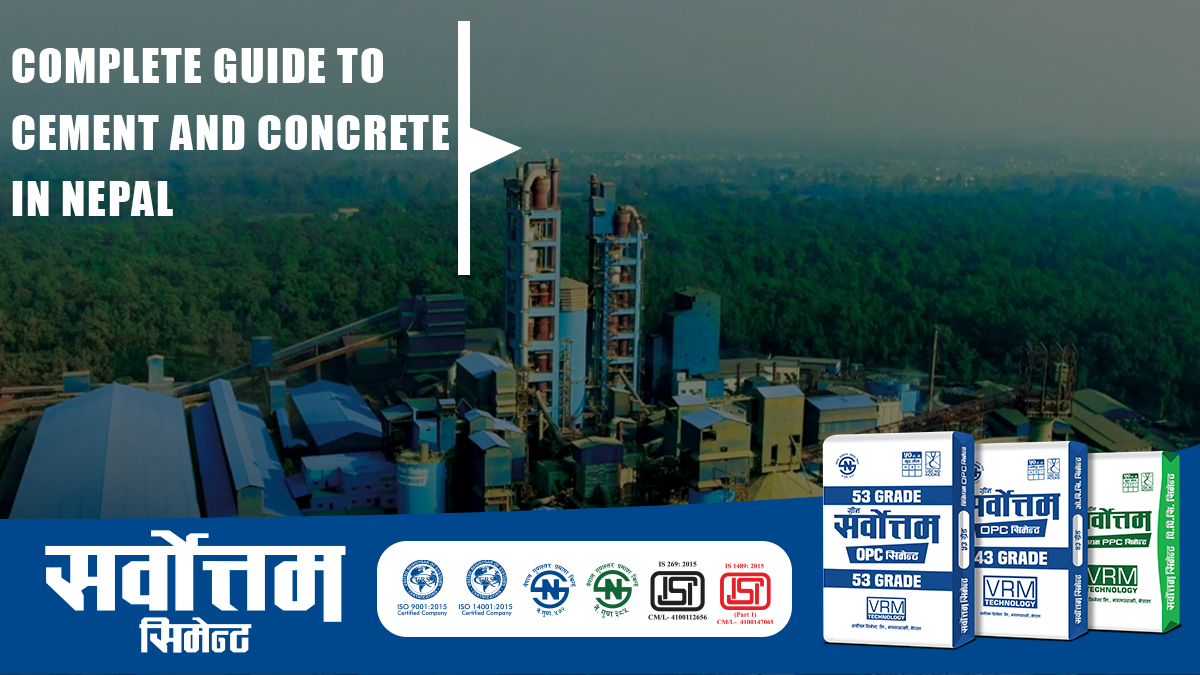
Complete Guide to Cement and Concrete in Nepal
Introduction: Why Choosing the Right Cement Matters
Choosing the best cement in Nepal is one of the most critical decisions in any construction project. Whether you are building a house, commercial structure, or infrastructure project, the quality of cement directly impacts strength, durability, and safety.
In Nepal’s diverse climate ranging from humid Terai to colder regions the right choice of cement ensures that structures can withstand moisture, temperature variations, and seismic activity. Using the top cement in Nepal helps improve long-term performance and reduces maintenance issues.
This guide explains everything from types of cement to usage, strength, common problems, and how to select the best strength cement in Nepal.
What is Cement and Concrete?
Cement is a binding material that, when mixed with water, sand, and aggregates, forms concrete. Concrete is the primary material used in modern construction due to its strength and durability.
● Cement acts as the binder
● Sand and aggregates provide structure
● Water initiates the chemical reaction (hydration)
To understand more about different varieties, refer to types of cement used in Nepal.
Know more about Cements: Best cement for plastering
Types of Cement Used in Nepal
Understanding different types of cement is essential for choosing the right material.
OPC (Ordinary Portland Cement)
OPC is widely used for structural construction due to its high early strength. It is commonly considered the best OPC cement for applications such as beams, columns, and slabs where load-bearing capacity is important.
Refer to the difference between OPC and PPC cement for a detailed comparison.
PPC (Portland Pozzolana Cement)
PPC contains pozzolanic materials that improve durability and resistance to moisture. It is commonly used for plastering and masonry work and is often regarded as the best PPC cement for long-term performance.
You can also explore 43 grade vs 53 grade cement explained to understand strength variations.
Which is the Best Cement in Nepal?
The best cement in Nepal depends on the type of construction, environmental conditions, and strength requirements.
High-quality brands such as Sarbottam Cement are widely trusted due to consistent strength, advanced manufacturing processes, and durability suited to Nepal’s environment.
You can read why this is considered the best cement in Nepal and explore cement quality comparison in Nepal for deeper understanding.
How Cement Works in Concrete
When cement is mixed with water, it undergoes a chemical reaction called hydration. This reaction forms a paste that binds aggregates together, creating a solid and durable structure.
This process determines the overall strength, durability, and resistance to cracking.
To understand this better, see cement role in structural strength and why concrete fails to achieve strength.
Water-Cement Ratio: The Key to Strength
The water-cement ratio plays a crucial role in determining concrete strength.
● Excess water reduces strength and durability
● Insufficient water affects workability and bonding
Maintaining the correct ratio is essential for achieving strong and durable concrete. Refer to mistakes that weaken concrete and achieving strong concrete mix for practical insights.
Where is Cement Used in Construction?
Cement is used in different parts of construction, and the choice varies based on the application. Foundation
Requires high-strength cement, typically OPC.
Columns and Beams
These are critical structural elements. Refer to cement for beam and column work. Slabs
Require proper mix design to handle loads effectively.
Plastering
For smooth finishing, PPC is commonly used. See best cement for plastering walls and cement calculation for plastering.
Brickwork
Requires proper proportioning. Refer to cement calculation for brickwork.
Role of Curing in Concrete
Curing is the process of maintaining adequate moisture in concrete to allow proper hydration and strength development.
● Minimum curing period: 7 days
● Recommended curing period: 14 to 28 days
Without proper curing, concrete may develop cracks and lose strength significantly. Refer to importance of curing in concrete for detailed guidance.
Common Cement and Concrete Problems in Nepal Several issues arise due to improper use of cement and poor construction practices. Dampness in Walls
See causes of dampness in walls.
Plaster Cracks
Refer to why plaster cracks in Nepal.
Cement Cracking
Understand cement cracking issues.
Weak Concrete
Refer to common cement myths in Nepal.
How to Check Cement Quality Before Use Before using cement, basic quality checks should be performed:
● Check manufacturing date (fresh cement is preferable)
● Ensure it feels smooth and free from lumps
● Check for uniform color
Refer to check cement quality before use for detailed methods.
How to Choose the Right Cement
Selecting the best cement in Nepal depends on the application.
Use Case Recommended Cement
Structural Work OPC
Plastering PPC
Moist Conditions PPC
High Strength Requirement OPC 53 Grade
Refer to choosing the right cement for your project for detailed guidance.
Why Brand Quality Matters
The quality of cement depends heavily on the manufacturing process and consistency. Brands such as Sarbottam Cement ensure:
● Consistent compressive strength
● Better durability
● Advanced production technology
Cement Market Trends in Nepal
The cement industry in Nepal is growing due to increasing demand from infrastructure development, urban expansion, and hydropower projects.
Refer to cement market trends in Nepal for insights into future developments.
Final Thoughts
Choosing the top cement in Nepal is not just about cost. It is about ensuring long-term safety, structural strength, and durability.
Depending on your needs:
● Use the best OPC cement for structural strength
● Use the best PPC cement for durability and plastering
● Focus on proper mixing, curing, and application
Frequently Asked Questions (FAQs)
What is the best cement in Nepal for house construction?
The best cement in Nepal for house construction depends on usage. OPC cement is preferred for structural work like columns and slabs, while PPC cement is better for plastering and long-term durability.
Which is better: OPC or PPC cement?
OPC cement provides higher early strength and is ideal for load-bearing structures. PPC cement offers better durability, reduced cracking, and is suitable for plastering and masonry work.
How can I identify good quality cement?
Good quality cement should be fresh, smooth to touch, free from lumps, and have a uniform color. Always check the manufacturing date before use.
What happens if too much water is added to cement?
Adding excess water reduces the strength of concrete and increases the chances of cracks and durability issues.
How long should concrete be cured?
Concrete should be cured for at least 7 days, but for best strength and durability, curing for 14 to 28 days is recommended.
Which cement is best for plastering in Nepal?
PPC cement is generally considered the best cement for plastering because it provides better finish, workability, and resistance to cracks.
Why does cement crack after construction?
Cement cracks can occur due to improper curing, excess water in the mix, poor quality materials, or temperature changes.
What is the difference between 43 grade and 53 grade cement?
53 grade cement has higher early strength compared to 43 grade cement, making it suitable for high-strength structural work. 43 grade is commonly used for general construction.
Which is the best strength cement in Nepal?
The best strength cement in Nepal is typically OPC 53 grade from trusted brands, as it provides higher compressive strength and durability.
Can cement expire?
Yes, cement has a shelf life. It is recommended to use cement within 2 to 3 months of manufacturing for best performance.


